To Live is . . . Me?

For to me, to live is Christ and to die is gain.
— Philippians 1:21
Let this register in your brain, then put it on hold for a minute: obsessive-compulsive disorder is me-driven.
Got it? Good. Set it aside and let’s begin.
When I was a twelve-year-old baby Christian and heard “to live is Christ and to die is gain” at church—which I did, often—the grammar always struck my ear funny.
Shouldn’t it be, “To live is to be like Christ” or “To live is to follow Christ,” I thought?
No matter what I tried, it felt like a couple words were missing. But I played along with the funky wording and tried emphasizing different parts of the sentence to see if that helped: “To live is Christ.” “To live is Christ.” “To live is Christ.” It all seemed clumsy. Why’d Paul word it that way?
It turns out, of course, that Paul deliberately rigged the language for impact. Research revealed that a literal translation of the original Greek goes like this: “To live — Christ.” In other words, Paul compressed his entire identity, purpose, and direction into one word — a name that did double duty as a descriptor. Because there were no set-up words intervening, the sudden interjection packed more wallop: Life = Christ.
Christ is the center. Christ is the meaning. Christ is the motivation. Christ is the point.
A parallel would be, “The sky is blue” — only meaning not that the sky “has a blue hue,” but trying to convey the identity claim, “If you want to know what the sky is, it is blue. It’s built out of something called ‘blue.’ ‘Blue’ is all you need to know. ‘Blue’ encapsulates the whole thing. We wouldn’t even know what ‘sky’ meant if it weren’t for blue. Sky = blue.”
Now, with that idea firmly in your mind, back to our OCD. Where Paul says, “To live is Christ,” OCD whispers, “To live is … me.” “Me” is what the OCD lifestyle is made of. “Me” encapsulates everything.
Per OCD, to live is to be filled with my thoughts; my fears; my rituals; my need for certainty; my need for control; my need to check and analyze and replay and study until it all lines up. When we live according to OCD, we live according to me. Life = me.
But where OCD is inward, Christ is upward. Outward. His way, not mine. Against OCD’s strident, clutching wishes, we move away from ourselves. That’s the contrast that hits so hard when you compare Paul’s “is” statement to the one we OCD folk live by. OCD tells us it’s all us: We must prevent disaster; we must make everything right; we are the center. Paul’s telling us no—Jesus holds everything together; Jesus is the righteousness we cannot make for ourselves; Jesus is the center.
When Paul says “to live is Christ,” it’s nothing less than a total reorientation. He’s saying we cannot—fundamentally cannot—experience real, full, rich life so long as our OCD brains keep calling the shots. There is no life there. Life isn’t OCD, which means it most certainly is not me. Life is Christ, and only Christ. He’s the only one equipped to make our lives . . . alive.
Pray this: “Lord, pull my gaze from myself to You.” Every time OCD tries to drag you back into the prison of self-focus, say, “To live is Christ, not me. Not my fears. Not my compulsions. Not my need for certainty. To live is Christ and nothing else, and Christ is outward, in a space where there’s more than me. Life is not defined by my thoughts. It’s bigger. My life is defined by Christ.”
His name is both descriptor and identity in a single word, with no qualifiers or buildup necessary. To live is Christ. To live is Christ. To live is Christ. Whenever you wonder what the point of it all is, stun yourself—as Paul did his audience—with that surprise one-word, one-name answer: Christ.


Welcome, I'm Rob Johnson!
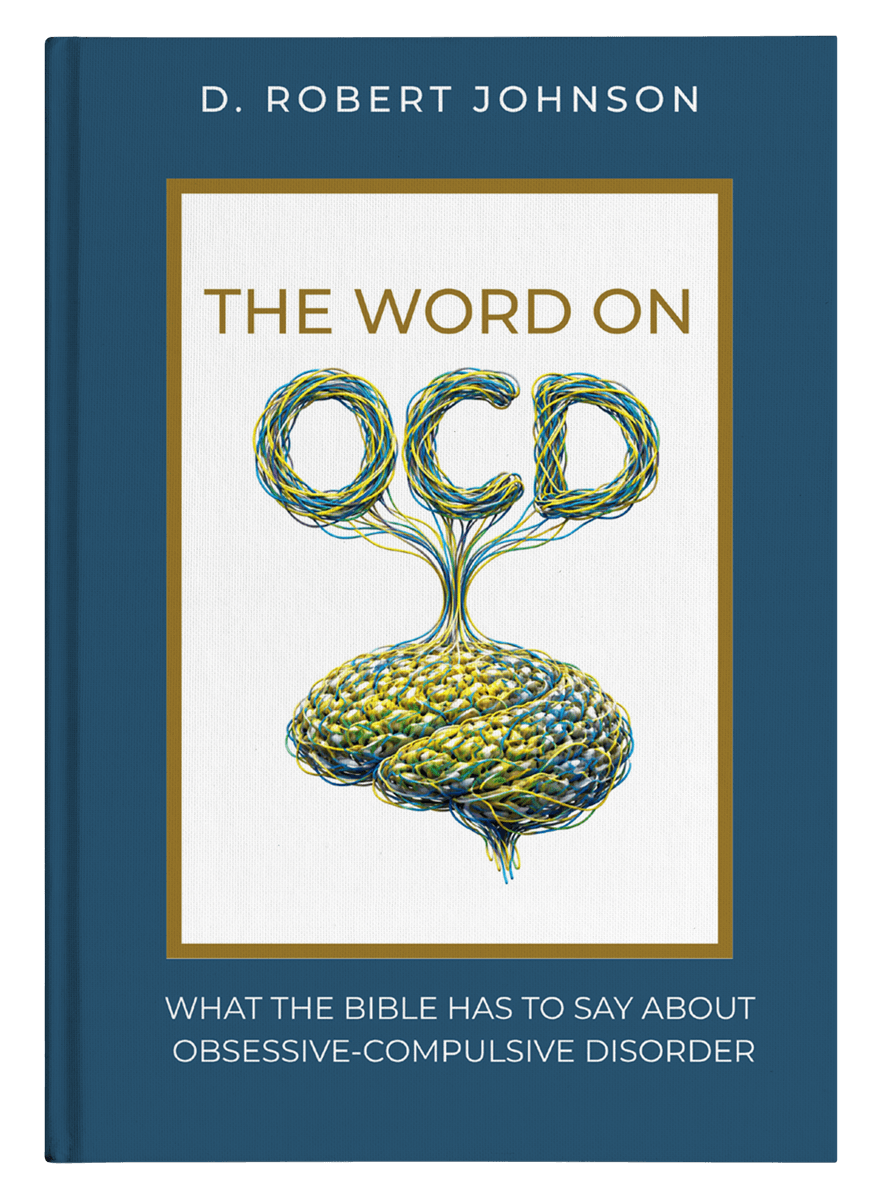
I tried hard to pack The Word on OCD: What the Bible Has to Say About Obsessive-Compulsive Disorder with a comprehensive look at how the Bible integrates meaningfully with both medicine and therapy in treating Christians with OCD. I have ongoing thoughts on the subject, though, and I’ll bet you have ongoing questions, too. To help with both challenges, I’ve created a blog. Take a peek! When I’ve got something new to say—or when I’m answering a question you’ve asked—I’ll drop a new blog post. Be sure to check back regularly, as I add a new post every week or so!
Search the Blog
Check out the Book here