The Human Master

In The Word on OCD, an overarching theme is how, during my recovery, familiar Bible verses were jump-started to life, infused with electric, revelatory applicability when re-read with an OCD-saturated mind.
That’s normal, I think. Whenever we’re going through a traumatic experience, we put on special glasses that filter everything we take in—all mental and sensory experiences—causing us to interpret them in light of our circumstances. So it was with Bible verses. One after the other, entrenched understandings of well-worn Bible passages were shaken.
Take Colossians 3:23-24, for example: “Whatever you do, work at it with all your heart, as working for the Lord, not for human masters, since you know that you will receive an inheritance from the Lord as a reward. It is the Lord Christ you are serving.”
If your churchgoing history is anything like mine, every sermon you’ve ever heard on those verses was meant to be a ray of sunshine to people with uninspiring jobs. “Be encouraged! God sees the good work you’re doing, and that’s what really matters. He’s your ultimate boss, after all.”
I don’t challenge that perception at all. I’m just saying that if the verses are stuck in your head like that, you’ll miss their profound applicability to OCD. Here’s the applicability: I encourage you to focus on the words “human masters” … and to consider yourself, OCD sufferer, as the chief human master to whom you’ve been reporting.
Nobody drives OCD people harder than we drive ourselves, right? And like the world’s worst boss, we’re impossible to please. We fuss and doubt and strive and overthink and are consumed trying to live up to a preposterous standard we can’t even identify, much less hit. We never “arrive” because … well, we’re not even sure how we’d know for certain if we did! We’re reporting to a boss who cannot be satisfied.
Ecclesiastes is packed with wisdom about viewing ourselves as unappeasable bosses. Solomon sought to spare future generations the futility and exasperation he’s experienced taking the “Be Your Own Boss” idea to ludicrous extremes. Even though he literally did everything he wanted and nothing he didn’t, here’s where he ended up: “What do people get for all the toil and anxious striving with which they labor under the sun? All their days their work is grief and pain; even at night their minds do not rest. This too is meaningless.”
Anxious striving. Honestly, a more succinct synopsis of OCD has never been written. All their days their work is grief and pain; even at night their minds do not rest. And then the biggest condemnation: This too is meaningless. In the end, the striving doesn’t satisfy. It’s for nothing.
Depressing, yes. But it’s a realistic, fresh assessment—perhaps, even, the epitaph—of a life spent doing nothing but serving our insatiable selves. Even when we knock every other boss out of the way and take over, it’s only to learn that we can’t be happy, and we exhaust ourselves trying. As Solomon pointed out early in this book, “All things are wearisome, more than one can say. The eye never has enough of seeing, nor the ear its fill of hearing.” It’s like the old comedy skit where a lost traveler asks a farmer for directions. After much head scratching and many false starts, the man sighs and concludes, “Come to think of it, you can’t get there from here.”
Fabulously wealthy Solomon, with near-infinite resources and power, comes to the same conclusion. I can’t get there, can I? Not this way. Upon this admission, he plops down on his throne, the arms within his golden, embroidered robe limp, and shakes his downcast, crown-encircled head in frustration and defeat.
But then … an inkling comes. His brows furrow and he looks up, eyes fixed far away. His countenance softens. A corner of his mouth curves upward and he lets out a quiet huff before saying, with dawning revelation, “A person can do nothing better than to eat and drink and find satisfaction in their own toil.” Chuckling that he ever thought he could be his own boss, he admits, “This, too, I see, is from the hand of God, for without him, who can eat or find enjoyment?” The hand of God, not me. “To the person who pleases him God gives wisdom, knowledge and happiness.”
With that realization from Ecclesiastes in mind, back to the Colossians passage we just read through our OCD glasses: “Whatever you do, work at it with all your heart, as working for the Lord, not for human masters, since you know that you will receive an inheritance from the Lord as a reward. It is the Lord Christ you are serving.”
When you work for Him, God gives you something you cannot achieve as your own boss: an inheritance. A payoff. Real wealth. Real satisfaction. Wisdom, knowledge and happiness—in short, everything we could not achieve by listening to our own unquenchable brains and indulging the old taskmaster—OCD—that we had put in the boss’s chair.
OCD is that unappeasable boss. In so many ways, it acts just like Solomon, who threw everything aside to do whatever he wanted for as long as he wanted … only to never arrive. When we follow a boss like that, we inevitably discover exactly what Solomon did—that we quite literally cannot get there from here.
By contrast, when we quiet our minds and work even the shortest moment for the Lord Christ, we begin to taste real fulfillment. The next time you hear Colossians 3:23-24 quoted, put aside your old way of hearing it. Consider it not as a pep talk to people with bad bosses, but as a complete employment reassignment: You’re taking yourself out of the big leather chair and relinquishing to a Boss who freely hands out fulfillment.


Welcome, I'm Rob Johnson!
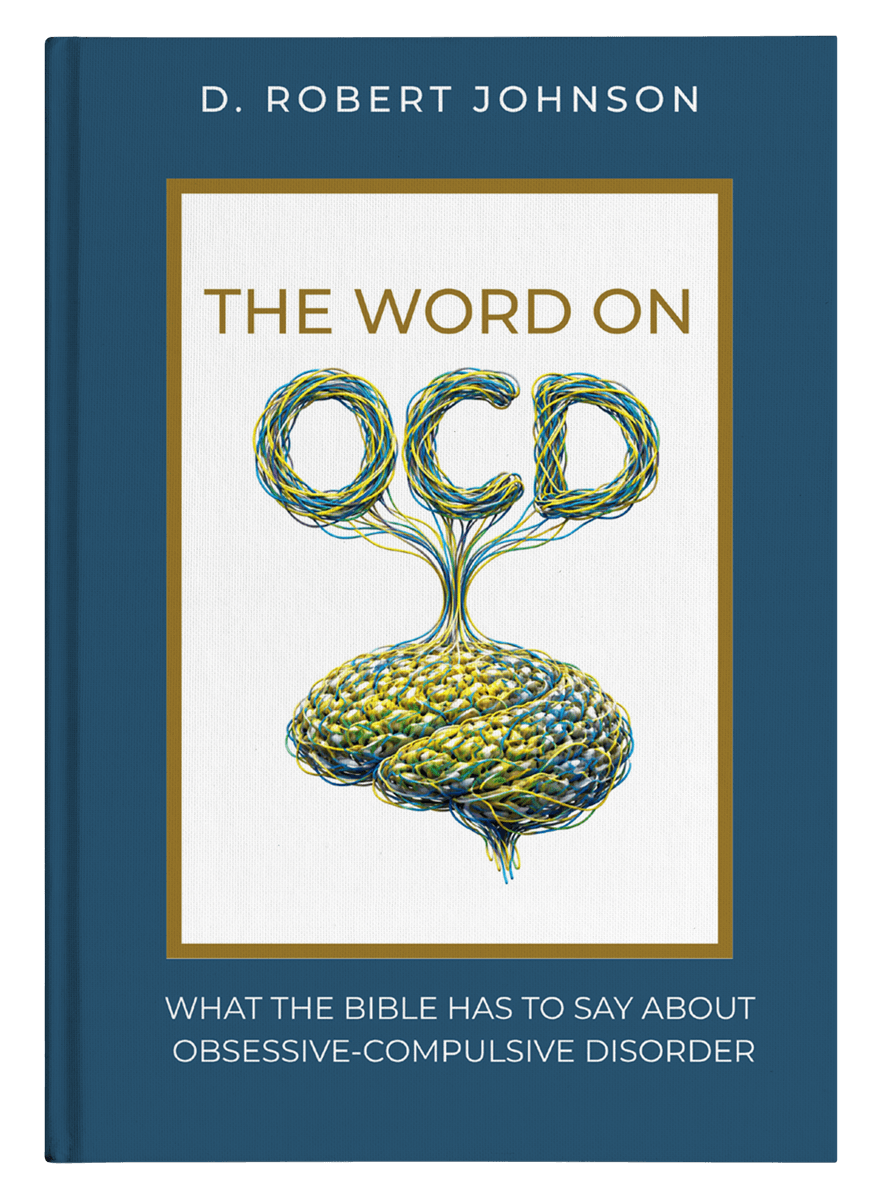
I tried hard to pack The Word on OCD: What the Bible Has to Say About Obsessive-Compulsive Disorder with a comprehensive look at how the Bible integrates meaningfully with both medicine and therapy in treating Christians with OCD. I have ongoing thoughts on the subject, though, and I’ll bet you have ongoing questions, too. To help with both challenges, I’ve created a blog. Take a peek! When I’ve got something new to say—or when I’m answering a question you’ve asked—I’ll drop a new blog post. Be sure to check back regularly, as I add a new post every week or so!
Search the Blog
Check out the Book here