When “Good Enough” Isn’t

We OCD folk have a terrible time feeling content, don’t we? We disdain it like bored, fidgety teenagers, and here’s why: We can’t leave well enough alone. We take what’s already good and—thinking we know better—try to bring “extra” to it.
We are compelled to do extra. We gild our lilies. We take things others would leave as-is and try to enhance them … and then reinforce and justify that behavior. “I need to add on. I need to double-check. I need to build extra layers. I need to tack on something because it’s necessary, protective, better. Even holier. My way is an improvement.”
Against that, our drowned-out sensibility can only whisper, “You were fine to begin with. You know you didn’t improve anything, right? In fact, you made everything unnecessarily heavy and complex. You made it worse, and for no good reason.”
The Bible isn’t silent on our proclivity. One of the unexpected places where it meaningfully addresses our excesses is 1 Corinthians 3, where Paul called out the young Corinthian church’s teenager-style tendency to pooh-pooh foundational teachings—foundations Paul himself had laid—as passé and simplistic in comparison to trendier teachings from a new, more dynamic teacher.
Now, from what we gather in Scripture, this new teacher, Apollos, wasn’t a bad guy at all. He wasn’t leading the church astray. In fact, in the book of Acts, Apollos is described as “eloquent and mighty in the Scriptures.” It’s just that his style of speaking was more polished, more in line with the charismatic oratory that the sophisticated Corinthians—Greeks, after all—appreciated.
Where Paul had been Billy Graham preaching God’s love and Christ crucified, Apollos was Charles Spurgeon, using language like a concert pianist and delivering pithy, quotable soundbites. The intellegentsia in the church were absolutely smitten with Apollos and aligned themselves with him, disdaining Paul as a country bumpkin. Although sides did not need to be taken, these progressive sophists regarded Apollos as not just good, but better. Additional. They felt that Paul had left things out and that Apollos was rectifying that.
As it always does, side-taking produced a second side: Old-timers became more entrenched in defense of Paul, so a schism developed.
When Paul got wind of that, he wrote a letter making it clear that neither he nor Apollos was “better”—they were just two like-minded gardeners doing different jobs: Paul had planted the seed of the Corinthian church, then Apollos came along and watered it. The “growing” part was God’s work, not Paul’s or Apollos’s, and was the same as it had been from the start.
He drives that home in verse 8 where he declares, “The one who plants and the one who waters have one purpose, and they will be rewarded according to their own labor. For we are co-workers in God’s service; you are God’s field, God’s building.”
Here’s where the OCD parallel kicks in. While admitting that Apollos is, indeed, building on the foundation he laid, Paul makes it clear that it’s not by bringing something “extra.” Nothing about the foundation—Jesus Christ—has been altered or improved upon in the least. The Gospel is still the Gospel. Since Paul left town, Apollos hasn’t been fussily adding filigree or embellishment. He’s expanding the same foundation Paul began.
Listen even more intently now, OCD friends, as Paul takes pains to squash this naïve narrative completely in verses 12-15: “If anyone builds on this foundation using gold, silver, costly stones, wood, hay or straw, their work will be shown for what it is, because the Day will bring it to light. It will be revealed with fire, and the fire will test the quality of each person’s work. If what has been built survives, the builder will receive a reward. If it is burned up, the builder will suffer loss but will yet be saved—even though only as one escaping through the flames.”
Notice how Paul shoots down the idea of “extra,” irrespective of whether it’s straw, gems or gold. In other words, no matter how good the extra stuff is, tacked-on stuff is tacked-on stuff, and it simply won’t hold up under duress. When a good fire comes along, it’ll burn up. All of it. Even gold and diamonds have a melting point.
Does that mean that we OCD Christians with our fussy extras are doomed to destruction? No, of course not. We’re Christians. The same foundation Paul laid—of Christ crucified and raised—is present and intact. But my oh my have we added some frail additions to it, haven’t we? We’re a discontented breed drawn to gold, silver and gems, not realizing they may as well be wood, hay or straw. Regardless of perceived worth, in the refining fire of God’s unadorned truth, all of our “extra” becomes ash. Our foundation survives, yes, but everything else perishes—and not without leaving us worse for wear.
But there’s good news in the wake of that inferno: What’s eternal remains, and though we may have sustained some nasty burns, the only parts God burned down were the unnecessary ones. The fire didn’t condemn us, therefore—it liberated us.
Our takeaway? If we OCD Christians can agree to the pointlessness, futility and perishability of the Corinthian church’s attempt at improving the Gospel, then perhaps we’ll grasp the parallel truth that even our most logical, justifiable-sounding additions to “good enough” are not only unnecessary, but doomed. The pain in our blistered, ash-tinged fingers is God’s correcting letter saying, “You don’t need to do that anymore. You never did. Learn contentment.”


Welcome, I'm Rob Johnson!
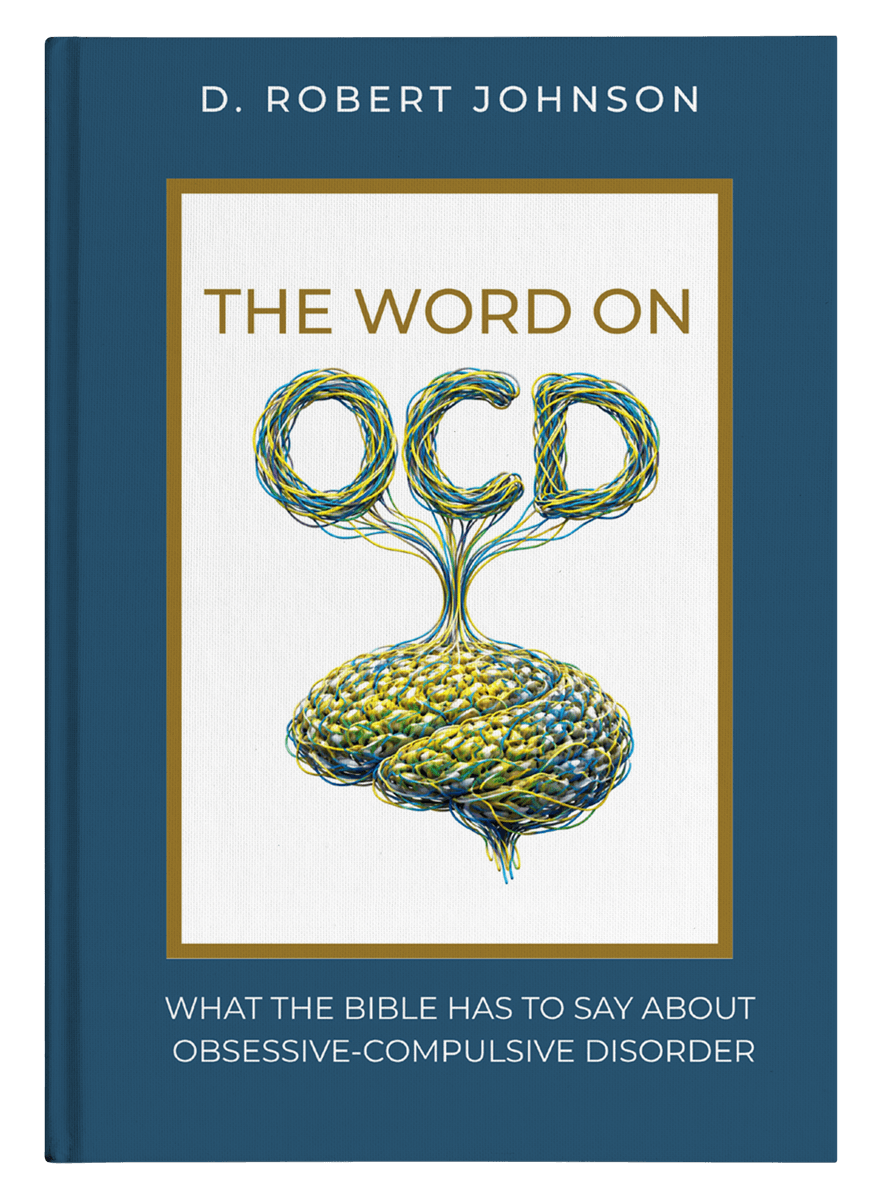
I tried hard to pack The Word on OCD: What the Bible Has to Say About Obsessive-Compulsive Disorder with a comprehensive look at how the Bible integrates meaningfully with both medicine and therapy in treating Christians with OCD. I have ongoing thoughts on the subject, though, and I’ll bet you have ongoing questions, too. To help with both challenges, I’ve created a blog. Take a peek! When I’ve got something new to say—or when I’m answering a question you’ve asked—I’ll drop a new blog post. Be sure to check back regularly, as I add a new post every week or so!
Search the Blog
Check out the Book here