Ears to Hear

Do not conform to the pattern of this world,
but be transformed by the renewing of your mind.
– Romans 12:2
You just read Romans 12:2 and, most likely, thought your usual thoughts about it. It’s a familiar verse to OCD people like us, so if you’re anything like me, perhaps your reaction was, Nice verse, but if I could’ve, I would’ve. I’m about to ask you to hear it differently, though, and I’ll use an illustration to do it.
I’ve always loved to drive, and it started young. When I was little and my dad was taking us anywhere, I’d lean forward from my place in the backseat and watch his every move—specifically, the way his steering inputs affected our car’s direction.
I wanted to understand how much steering it took to do various things, from changing lanes to making a right-hand turn. I observed that’d he’d turn the wheel less for the first, more for the second. It struck me that my dad was a genius to have all that figured out. How did he know ahead of time how far he was going to be turning the steering wheel?
One day, as Dad and I sat in our idling car while Mom ran into the grocery store, I asked him, “Dad, if you were going to turn the car into that parking lot over there, how much steering would you have to do?” Dad glanced where I was pointing, shrugged, and laid a finger on the six o’clock position on the wheel. “Oh, about like this,” he said, cranking the wheel counterclockwise until his finger was a three o’clock. He answered me so casually that it almost sounded like he was guessing.
Wow, I thought. Someday when I learn to drive, I’m going to have to become as smart as my dad and know how far to turn the wheel for everything!
You see my naïve assumption there, right? I was under the impression that in order to make any kind of maneuver in a vehicle, the driver had to know beforehand the exact amount he or she would be turning the wheel: You see the upcoming situation, crank the wheel a predetermined amount, and wait for the car to execute your command. Because that feat seemed so incredibly daunting (cataloging in one’s head the precise steering input for an infinite number of scenarios)—I was incessantly amazed that my dad could pull it off.
When I finally started driving, of course, that childhood paradigm went out the window. It turned out that upon approaching a corner, nobody (nobody I know, anyway) thinks, “I must now turn the wheel ninety degrees to the right.” Instead, we simply start turning, assess how the vehicle is responding, and adjust as necessary until we achieve what we want. You steer until you get there. That’s why Dad’s answer to my childhood question sounded like guessing! He was guessing!
When I started driving cars myself and learned that steering input is all about seeing and assessing and reacting on the fly—not calculating it all ahead of time—it felt like a giant discovery. Was I the first person who had ever figured this out? Shoot—I should write a book or teach a class and share what I just discovered! Other people need my understanding!
This is funny because it’s true, right? Think of a time in your life when—just like I did with steering—you “discovered” something on your own and felt like you’d just invented it. When you came at it unassisted and worked it out your own way, didn’t it feel like you were the first person who’d ever set foot on that planet? Science fiction author Robert A. Heinlein explained this common phenomenon in his own edgy way: “Each generation thinks it invented sex; each generation is totally mistaken.”
The fact of the matter is, when we “discover” an idea this way, it impacts us dramatically more than if we had come to it in a more prescribed, scholarly, direct fashion. Jesus knew this, and it affected the way He told stories. In fact, it’s why he told roundabout stories instead of point-blank answering people’s questions.
For instance, think of the time in Luke 10:25-37 when a self-righteous Jewish lawyer asked Jesus how to obtain eternal life. Jesus told him to love God and love his neighbor, right? That part was direct. But when the lawyer asked, “Who is my neighbor?”, Jesus knew the attorney had very specific ideas about which classes of people were good enough to qualify as “neighbors,” so instead of just saying something blunt and provocative like “everyone,” He instead launched into the story of the Good Samaritan. The result, of course, was that the lawyer figured out who the real neighbor was without anyone having to tell him. It was his own discovery, and it came out of his own mouth in his own words.
When I asked my dad how much he’d have to turn the wheel to steer into that parking lot, he indulged me and gave me a direct answer—his best guess. Honestly, it was all I could’ve handled at the time. It wasn’t until I was 15 and practicing driving in a parking lot—Dad riding shotgun—that he took the “Good Samaritan” route and let me figure out for myself how much steering input was necessary to execute different kinds of turns. As I grinned at my discovery, I was thinking, Ah, THIS is what you were trying to explain to me!
A discovered truth is a more impactful truth. This is why I believe that Jesus so often accompanied a parable with the words, “He who has an ear to hear, let him hear”: There’s the correct, academic answer … and then there’s that very same answer, only arrived at with a giant extra wallop because you came at it from your own direction.
Remember the verse we started this post with? Romans 12:2. You’ve heard it a million times. My telling it to you one more time—in an OCD context—didn’t add anything to your understanding of it, did it? Yes, we OCD people need a new way of thinking. Blah blah blah.
Most likely, you read that familiar verse with the same expectation my childhood self had when I asked my dad how far he needed to turn the wheel: I asked and he showed me. What I invite you to do, instead, is throw that out the window. Throw it out, just as I had to do during my first behind-the-wheel experience turning a wheel for myself.
When your ear is ready, have an ear to hear. Mind renewal, in all likelihood, will not come to you as a straight answer. It won’t be phrased the way you expect it to be phrased. While you’re listening to Jesus tell a story—which is exactly what He’s doing every time you’re in His Word studying any topic du jour—times will come when you look at the course ahead of you, and instead of predetermining where you’re going, you’ll start making seat-of-the-pants steering inputs and end up where you needed to be … almost without knowing for sure how you got there.
I’m here to tell you, that is the best way to “get there.” When you discover a renewed way to think for yourself, you at last have ears to hear. The lawyer couldn’t have really heard Jesus’ answer unless he came at it on his own. Most likely, neither will you. So be patient if Jesus asks to tell you a story, and be listening: You’re about to figure something out as though you were the first person who discovered it.


Welcome, I'm Rob Johnson!
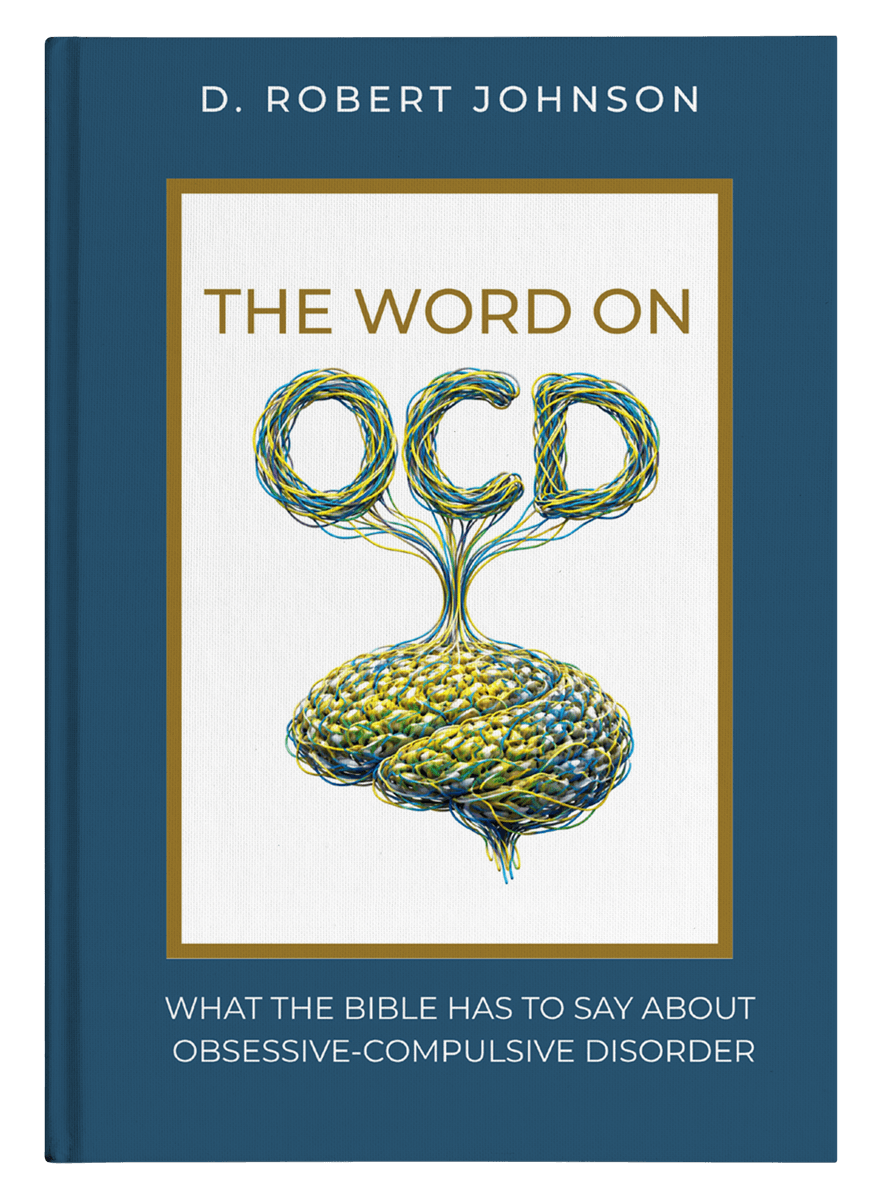
I tried hard to pack The Word on OCD: What the Bible Has to Say About Obsessive-Compulsive Disorder with a comprehensive look at how the Bible integrates meaningfully with both medicine and therapy in treating Christians with OCD. I have ongoing thoughts on the subject, though, and I’ll bet you have ongoing questions, too. To help with both challenges, I’ve created a blog. Take a peek! When I’ve got something new to say—or when I’m answering a question you’ve asked—I’ll drop a new blog post. Be sure to check back regularly, as I add a new post every week or so!
Search the Blog
Check out the Book here