Cold Comfort, Bright Hope

There’s a line near the beginning of Romans 5 that’s always landed a little flat on my OCD-attuned ears. Paul writes that “suffering produces perseverance; perseverance, character; and character, hope.”
Cold comfort, right? Especially to OCD-ers. In my mind’s eye, I picture myself sitting all dejected, beaten up once again by obsessions and compulsions, when a well-meaning friend pats me on the shoulder and says, “Hey, buddy—I know everything sucks right now, but look on the bright side: You’re developing character.”
Frankly, I’d want to punch that well-meaning friend.
Is the progression Paul outlines really necessary? He states that suffering leads to perseverance leads to character leads to hope. The “hope” part sounds great, but the process to get there . . . yuck. Never once have I woken up thinking, “You know what I’d love today? A little suffering to help me grow.” I would rather skip straight to hope — the bright, clean, finished product. The part where everything makes sense and my heart feels settled. The part where I survive an OCD episode less beaten up than usual, and maybe even a little optimistic.
But Paul doesn’t let us jump ahead. He insists that hope is not the starting point. It’s the product of something that’s formed in the places we’d rather avoid. In that scary place of suffering, we come to a crossroads. We either go through the same progression we’ve always gone through, or we see how Paul’s progression maps out something different.
Why Paul’s Sequence Used to Frustrate Me
For years, I read Romans 5 as if Paul were saying, “Suffering is good for you. Just hang in there and eventually you’ll get hope.” I felt like a kid being fed spiritual spinach, with Mom tricking me into eating by promising, “It’ll make you strong like Popeye.”
But Paul isn’t giving a parental platitude. He’s describing a process—an alternate process that promises real mental muscle not just by meeting resistance with willpower, but by being taken under the wing of a personal trainer who will work with us and transform us. Suffering, it turns out, isn’t somehow good in and of itself, like some noble-but-brutal rite of passage. It’s good because it’s a place where God meets us and can help us choose what comes next.
OCD’s Progression versus Paul’s
We all know the OCD cycle by heart:
- Suffering — The intrusive thought, the anxiety spike, the dread
- Compulsion — The scramble to feel “just right”
- Temporary relief — A fleeting drop in anxiety
- Stuck-ness — The brain learns, “I’m handling this the only way I can”
- Shame — “Why can’t I stop? What’s wrong with me?”
So when Paul talks about suffering leading to hope, it can feel like he’s describing a theoretical process that doesn’t match our lived experience. Just like spinach never really gave me the strength of Popeye.
But here’s the surprising thing: Paul’s progression isn’t a “sounds nice in theory” deal. It, too, begins with suffering . . . only to go in the opposite direction of OCD’s path.
Paul says:
Suffering produces perseverance — You trust God, stay in the suffering, then choose your course and stay on it. And as you do, you get better at it. You persevere.
Perseverance produces character — The longer you stay on course, the more savvy you get about how to stay on course. What’s working? What isn’t? That know-how is character.
Character produces hope — As you learn, the realization comes into your head, I’m doing this! I’m not great at it, but . . . something’s changing. You feel a little optimism. It’s confidence born from lived experience—the experience you just went through. God just proved that His progression works, and it occurs to you that maybe it’ll work even better in the future. That’s where the hope comes in.
Paul’s Romans 5 progression isn’t stuck-ness. It’s movement-ness. It expands outward.
It builds strength. It reinforces identity. It teaches you that you can stand in uncertainty — not because you’re strong, but because God is present. Where OCD says, “You can’t handle this,”
Paul says, “Perseverance is being formed.” Where OCD says, “You’re failing,” Paul says, “Character is emerging.” Where OCD says, “You’ll never be free,” Paul says, “Hope is rising.”
Both start in the same place of suffering, but from there everything diverges. Suffering’s not a pointless prison, but rather the starting place where God transforms pain into endurance, endurance into lived, success-based character, and character into optimism that you can repeat this process again and again.
For someone with OCD, that’s not cold comfort. That’s warm, steady, surprising hope.


Welcome, I'm Rob Johnson!
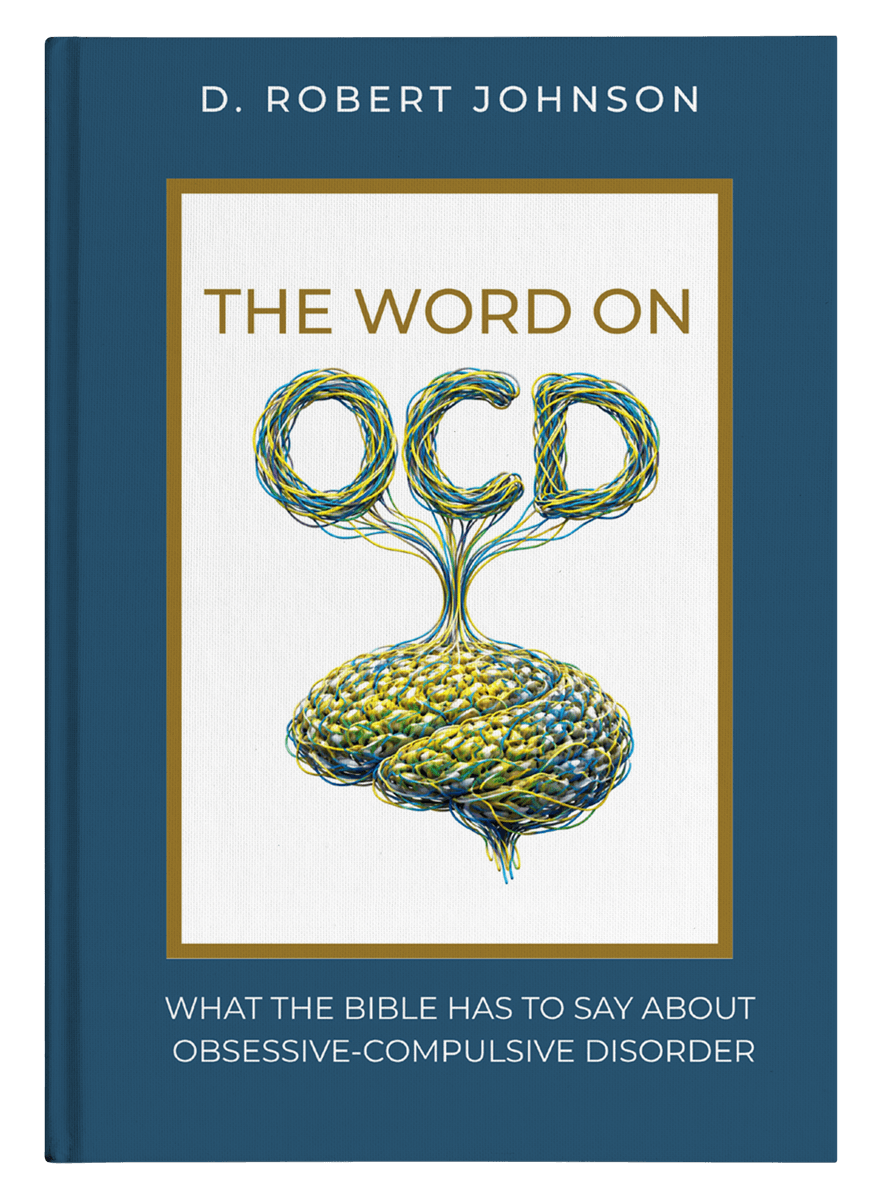
I tried hard to pack The Word on OCD: What the Bible Has to Say About Obsessive-Compulsive Disorder with a comprehensive look at how the Bible integrates meaningfully with both medicine and therapy in treating Christians with OCD. I have ongoing thoughts on the subject, though, and I’ll bet you have ongoing questions, too. To help with both challenges, I’ve created a blog. Take a peek! When I’ve got something new to say—or when I’m answering a question you’ve asked—I’ll drop a new blog post. Be sure to check back regularly, as I add a new post every week or so!
Search the Blog
Check out the Book here