Forever Things

When it comes to understanding what ultimately holds the highest reward for us, we Bible-believing OCD people have a hard time differentiating right-now things from forever things.
In fact, there’s no contest at all: Noisy right-now things get most of our energy. If only I could get this silly thing to work out right! I must I must I must! And though we are aware of what God’s will really is for us, we dismiss it and “right now” keeps winning.
Asaph, the writer of Psalm 73, seemed to have grasped this disconnect—being aware of what’s ultimately right, but being consumed with right-now. He spends the beginning of his poem bemoaning that wicked people seem to get all the breaks—they’re healthy and everything inexplicably goes right for them. They get all their “right nows.” Says Asaph in verse 5, gritting his teeth, “They are free from common human burdens; they are not plagued by human ills.” Not fair! If they get what they want, why can’t I?
As people with OCD, we want what they’ve got—all our ducks lined up. It’s not much to ask, right? To have everything be sanitary, symmetrical, safe, sorted, smoothed over, calmed down?
Asaph’s frustration comes to a head: “Surely in vain I have kept my heart pure,” he complains in verse 13. Then he appears to throw in the towel in verse 14: “All day long I have been afflicted, and every morning brings new punishments.” In other words, as the fatalistic 1980s quote claimed, “Life sucks, and then you die.” But just for us—not “those people.”
Oh, man—can we OCD people ever relate to that! Everyone we know seems to go blithely about, not even giving pause to the screaming minutiae we get hung up on. They just go, and do, and live . . . and it all works out fine! Disgusting.
It’s even worse for OCD Christians, as we’re living not merely with the misery of OCD, but in duality: We know in our hearts that the Spirit is persistently, gently calling our attention to eternal things, yet we still—with more than a little guilt—keep listening to our flesh. The greater that tension, the more guilty and desperate we feel—desperate enough, even, to roar in animal frustration. Aaaargh!
Asaph felt the same, as verses 21-22 lay out: “When my heart was grieved and my spirit embittered, I was senseless and ignorant; I was a brute beast before you.” Those of us with OCD know that animal wail well. It happens every time our right-now things don’t work out. That’s true for all OCD-ers, but we Christians have an extra layer: We instinctively turn to God for help, but we come in such cacophony that we render ourselves un-helpable. We’re two-year-olds in a tantrum refusing the calming embrace of our parents.
Turmoil and tantrums have a way of turning into exhaustion, and when this finally happens to Asaph, his preoccupation with “right now” dims and he has a “forever things” glimpse. I picture him slumped forward in a chair, elbows on his knees, with his hands dangling limply and his head hung low. He sighs and his lips part. “Yet I am always with you,” he tells God quietly in verses 23-24. “You hold me by my right hand. You guide me with your counsel, and afterward you will take me into glory.”
Moments later, that thought starts to color what Asaph thinks about the earthly things that’ve been absorbing him. In my mind’s eye, at this point he sits up, squints back and forth at nothing in particular and says, essentially, “Huh.” Shaking his head, in verse 25 he admits, “Earth has nothing I desire besides you.” He’s getting it. Then, in verse 26, he at last understands the futility of letting his wellbeing depend on right-now things, including his own body and well-being: “My flesh and my heart may fail, but God is the strength of my heart and my portion forever.”
“Portion” strikes modern ears funny, but it basically means “allotment” or “inheritance.” This is interesting because Asaph was a Levite—the set-apart, priestly Israelite tribe and the only tribe among the twelve that didn’t get assigned any land. God told them in Numbers that He was their portion. So, when Asaph complained about everyone else but him prospering, we can sense where he was coming from. Among the Jews, the Levites had less “right now,” instead being told to focus on “forever.”
Like the Levites, we Christians today aren’t promised that everything will line up in the here-and-now. This has special pertinence to those of us with OCD, doesn’t it? In fact, Jesus told us in John 16:33 to expect trouble in this world. This place isn’t our portion, just as it wasn’t Asaph’s. Here, we get what we get. If it’s good, yay. If it’s not, also yay. We have forever. Forever. That’s where we look for everything to line up, not here. Jesus has gone on ahead to get it all set up for us, just as He promised in John 14:2-3. Life can be great here on earth, yes. In fact, Matthew 6:33 promises that when get our priorities straight and seek God’s kingdom first, above everything else, He’ll make sure we have what we need down here on earth. But forever, friends, is where it all comes together.
How good will it be when we get there? God knows you and I have OCD, so His promise is particularly tantalizing to us: “What no eye has seen, what no ear has heard,” says 1 Corinthians 2:9-10, “and what no human mind has conceived—the things God has prepared for those who love him—these are the things God has revealed to us by his Spirit.”
The Spirit led Asaph to his “forever things” insight, and just as it did with him, let it help settle our minds—maybe even in exhaustion—about the right-now things that just won’t go our way.


Welcome, I'm Rob Johnson!
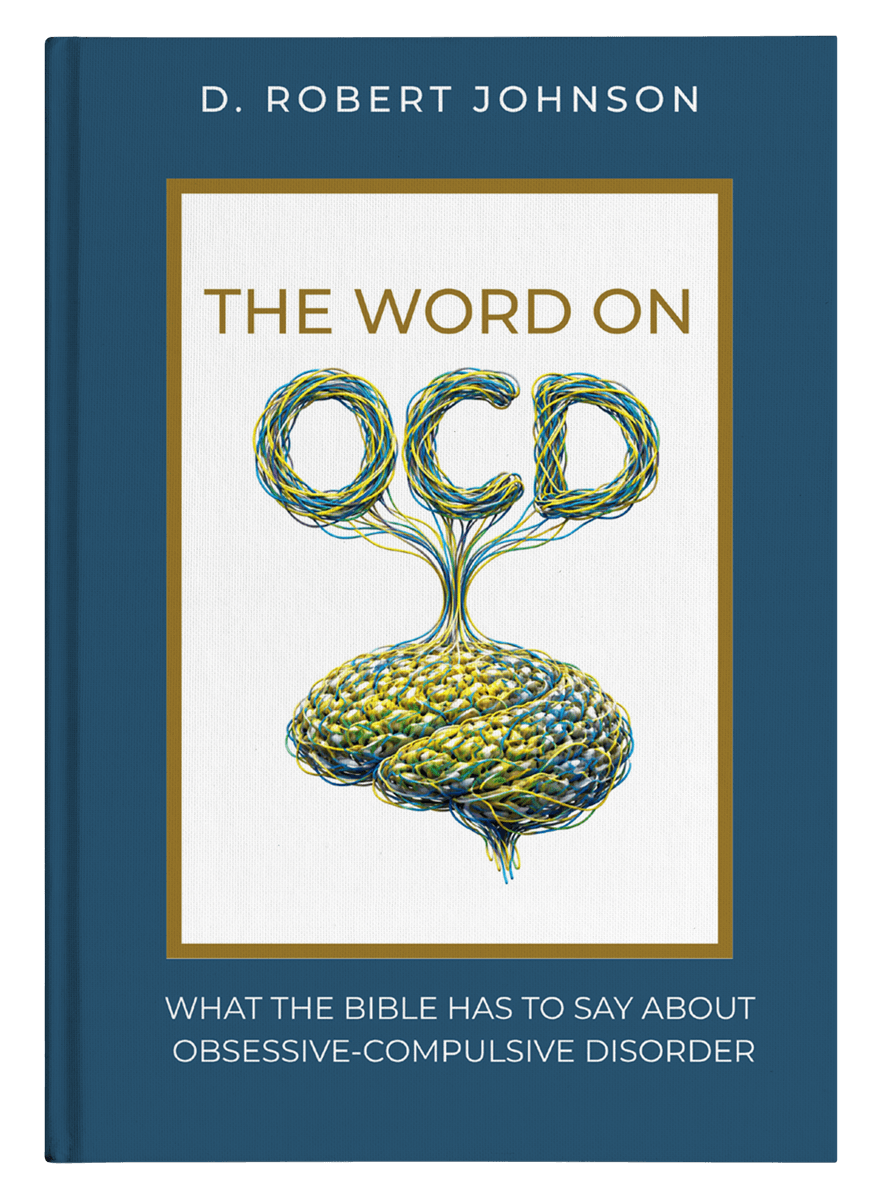
I tried hard to pack The Word on OCD: What the Bible Has to Say About Obsessive-Compulsive Disorder with a comprehensive look at how the Bible integrates meaningfully with both medicine and therapy in treating Christians with OCD. I have ongoing thoughts on the subject, though, and I’ll bet you have ongoing questions, too. To help with both challenges, I’ve created a blog. Take a peek! When I’ve got something new to say—or when I’m answering a question you’ve asked—I’ll drop a new blog post. Be sure to check back regularly, as I add a new post every week or so!
Search the Blog
Check out the Book here