
Yoked to Our Heroes

Who are your heroes? Whom do you aspire to be like? Which musical artists, comedians, actors, authors, intellects, politicians or athletes really “do it” for you?
Or, if you’re an OCD person, which idealized vision of yourself are you trying in vain to live up to?
If you think about it, at any given time, all of us are emulating someone. Aligning ourselves with someone. Really, we’re attaching ourselves to someone who represents our archetype, even to the point of channeling them at times. We see someone doing something that resonates and we try to appropriate it.
There’s a Bible word for this idea: “Yoked.” Like oxen, right? You’ve seen old movies where a pair of oxen pulls a cart. There’s always a massive wooden bar attaching their necks together so the two beasts don’t go wandering off in separate directions, and also to make sure they combine their strength effectively. That’s the yoke. Farmers would even yoke a young, impulsive ox to an older, steady one to teach it how to walk the right path.
In the same way, we humans—wittingly or otherwise—yoke ourselves to people and ideologies all the time. Let me follow you. Let me become more like you.
In fact—and this may incite strong objection from our sense of pride—as independent as we may believe ourselves to be, there really is no such thing as a free agent in this world. We’re yoked. Every single one of us, all the time. What’s more, of the two oxen, we’re the rookie. It’s the one we’re attached to showing us how to do it.
Bob Dylan expressed this yoking idea well in his 1979 song Gotta Serve Somebody:
You may be an ambassador to England or France
You may like to gamble, you might like to dance
You may be the heavyweight champion of the world
You may be a socialite with a long string of pearls
But you’re going to have to serve somebody, yes indeed
You’re going to have to serve somebody
Well, it may be the devil or it may be the Lord
But you’re going to have to serve somebody
While you’re chafing at that idea, toss in your OCD or anxiety. Where’s the idea that you can’t rest until you do something “just right” come from? Whose standard is that? Whose notion of “how it should be” are we conforming to? It’s an essential question, as some of these notions are harsh, wild, bucking, sinister things that drag us more than teach us. We’re slaves to them.
Jesus saw this harsh servitude rampant among the people who surrounded him, so He proposed nothing less than a “yoke exchange” in Matthew 11:28-30: “Come to me, all you who are weary and burdened, and I will give you rest. Take my yoke upon you and learn from me, for I am gentle and humble in heart, and you will find rest for your souls. For my yoke is easy and my burden is light” (emphasis mine).
Notice that yoking is presupposed. Taken for granted. Jesus isn’t telling free-range Israelites that they need to be chained up. He’s saying, “Bust that backbreaking, splintery yoke you’re currently laboring with and come alongside me instead. It’s a swap. Walk with me and see how much easier it is. When you attach yourself to me, the yoke’s practically a feather and it’ll never chafe or choke.”
If the assumption of yoking still bothers you, there’s plenty more biblical support for it. In Romans 6:16-18, the Apostle Paul writes,
Don’t you know that when you offer yourselves to someone as obedient slaves, you are slaves of the one you obey—whether you are slaves to sin, which leads to death, or to obedience, which leads to righteousness? But thanks be to God that, though you used to be slaves to sin, you have come to obey from your heart the pattern of teaching that has now claimed your allegiance. You have been set free from sin and have become slaves to righteousness.
The good kind of “slavery” Paul speaks of is a spin on the same featherweight yoking Jesus proposes. It’s a liberating thing, not an imprisoning one. Paul touches on the topic again in Galatians 5:1 when he urges those who’ve yoked themselves to Christ not to go back to their former masters: “Stand firm, then, and do not let yourselves be burdened again by a yoke of slavery.” More to the point, in the Sermon on the Mount recorded in Matthew 6, Jesus himself simply presumes yoking when He observes that we can’t be yoked to two things at the same time: “No one can serve two masters. Either you will hate the one and love the other, or you will be devoted to the one and despise the other.” There is never a question that we’re serving some master.
Indeed, human beings are never “unyoked.” We are always attached, aligned, enslaved, obedient, apprenticed, or devoted to something—even if, as is so often the case with OCD, it’s an unappeasable little god who looks an awful lot like a twisted version of ourselves. So, the question isn’t whether we’re yoked. It’s, “What are we yoked to?” Whatever it is, it’s either giving life or draining it. When we’re the rookie ox—and we’re always someone’s rookie ox—whoever we’re attached to determines the pace, the direction, and the weight of the load.
As Dylan sang, you gotta serve somebody. If your “somebody” has left you exhausted, lost and crushed, then you’ve chosen poorly. It’s time for an exchange. Come alongside Jesus instead and match His easy gait. Read about Him. Study Him. Do just as he does stride for stride, and marvel that the load starts to practically haul itself. He may not be the first master you’ve served, but He’s the one who offers rest.
2 Comments
Leave a Comment


Welcome, I'm Rob Johnson!
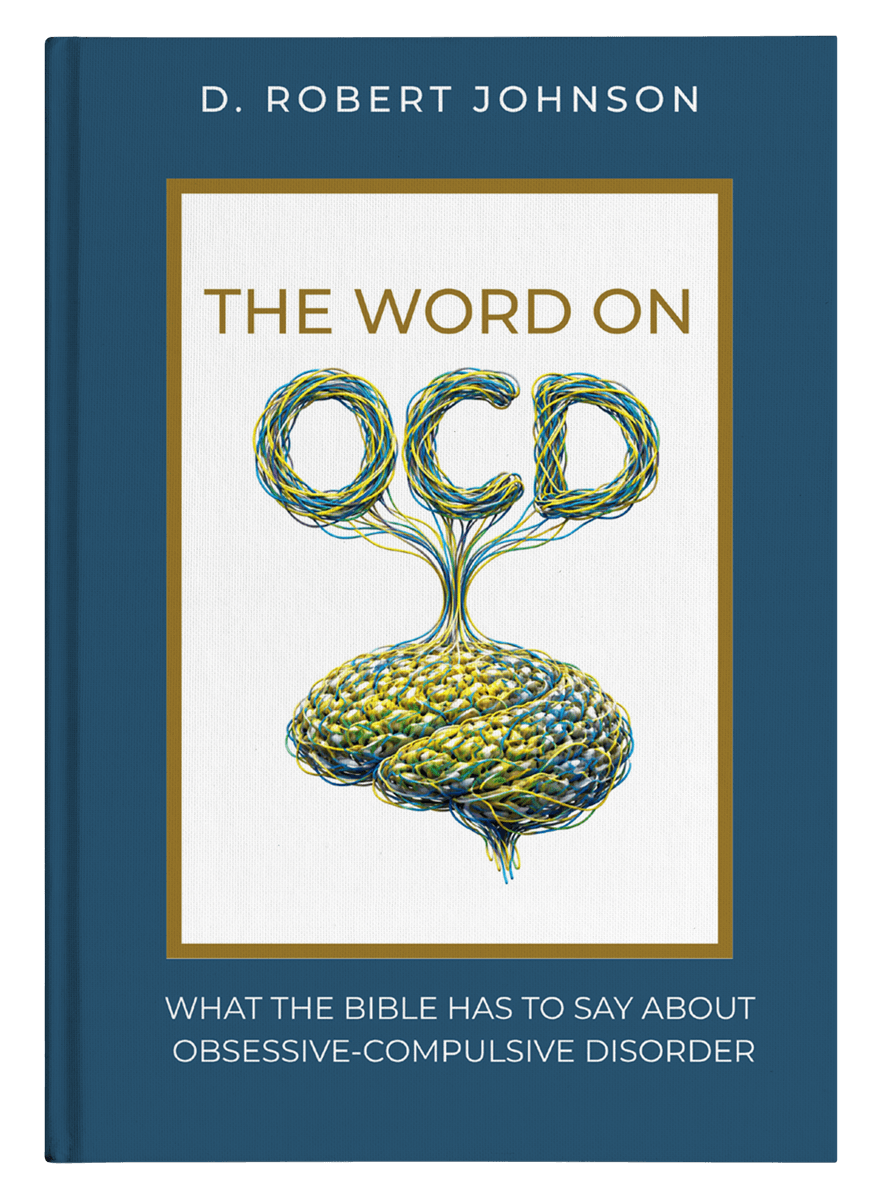
I tried hard to pack The Word on OCD: What the Bible Has to Say About Obsessive-Compulsive Disorder with a comprehensive look at how the Bible integrates meaningfully with both medicine and therapy in treating Christians with OCD. I have ongoing thoughts on the subject, though, and I’ll bet you have ongoing questions, too. To help with both challenges, I’ve created a blog. Take a peek! When I’ve got something new to say—or when I’m answering a question you’ve asked—I’ll drop a new blog post. Be sure to check back regularly, as I add a new post every week or so!
Search the Blog
Check out the Book here
Loved reading this it’s so true for all of us❤️
Thank you! Glad you enjoyed it.